
CHALLENGE 2
Challenge Description
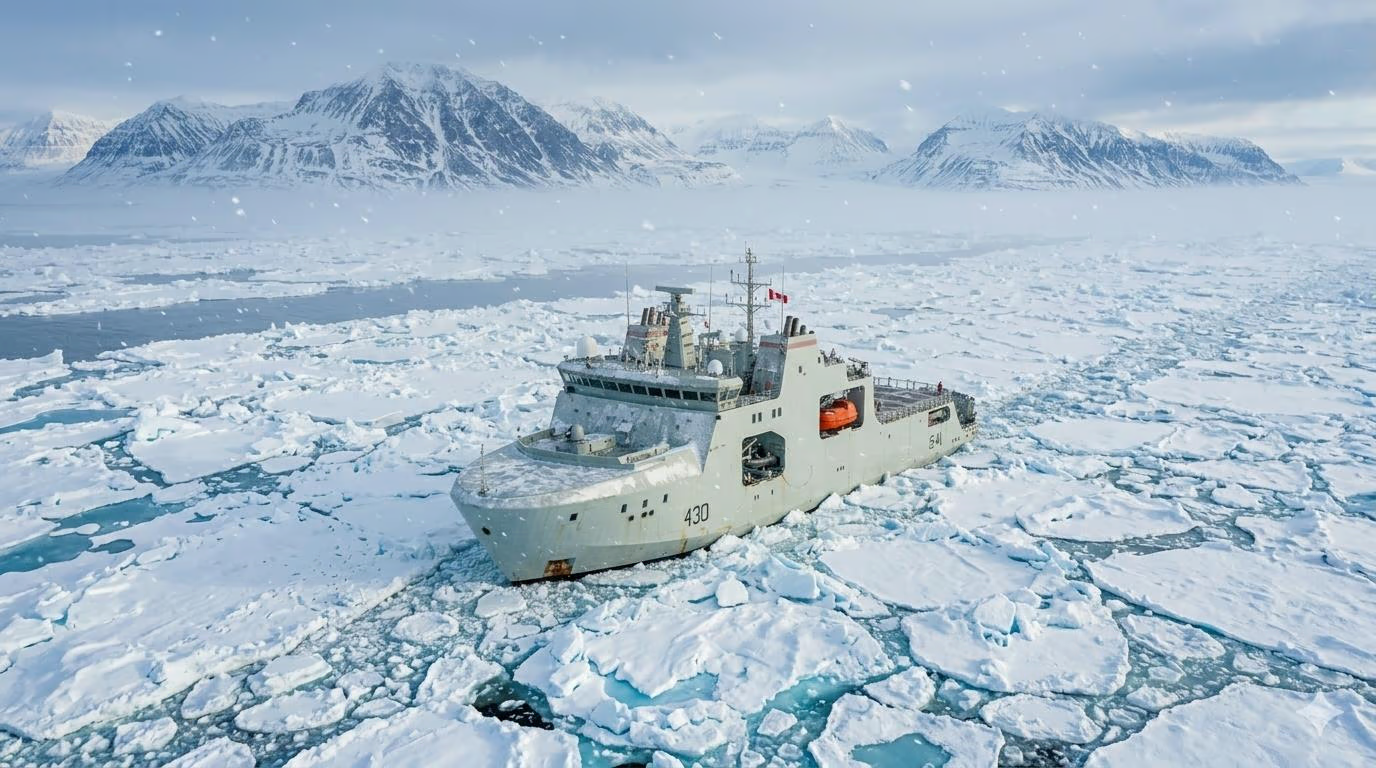
Challenge #2: Mastering the Arctic Environment
In the Canadian maritime arctic, operational advantage is increasingly defined by the ability to sense, understand, and to act with more freedom and speed than our opponents. This advantage is supported by smart and agile capabilities that enable better understanding and exploitation of the operational context. This challenge seeks practical, demonstrable technologies that deliver a clear operational edge in the harshest environments, from the bridge of the ship to the depths of the ocean.
Examples of what we are looking for:
We are seeking solutions that can be developed and demonstrated in a naval or coast guard context, that leverage the unique challenges of the Arctic to create a tactical advantage. Proposals should aim to create a functional prototype addressing one or more of the following areas:
- Cognitive Dominance and Augmented Awareness: Systems that incorporate real-time organic sensor data and present it intuitively to operators. This could include systems that interpret external video feeds for mariners or other novel methods for detection of anomalies, hazards and threats. Such systems could demonstrate dual-use applications such as safety monitoring, collision avoidance, and wildlife identification.
- Next-Generation Force Protection: Unmanned or automated systems that protect the vessel in remote locations. Examples include deployable underwater sentry systems to monitor and deter threats, or novel effectors designed to counter or deter underwater vehicles.
- Signature Management: Technologies that improve understanding and reduction of a ship’s detectable signature in Arctic conditions. This includes real-time awareness of radiated noise, particularly in ice environments, and solutions that reduce acoustic impact on the marine environment.
- Arctic Navigation and Sensing: Advanced systems that support safe and effective navigation through Arctic hazards. This area includes optimised ice detection and avoidance, breakthrough approaches for ultra-precise inertial navigation and other resilient positioning technologies designed for high-latitude environments where satellite navigation may be unreliable or unavailable.
Technical and Regulatory Readiness
- Present technologies at Technology Readiness Level (TRL) 6 or higher
- Demonstrate strong potential for real-world viability
- Address regulatory challenges, including shipping code compliance, within the proposal
- Show awareness of government security and clearance requirements, including timelines for exchanging engineering data, if necessary
Thales’ Goals
This initiative aligns with Thales’ ambition to:
- Lead Innovation in AJISS: Strengthen the Arctic and Offshore Patrol Ships (AOPS) and Joint Support Ships (JSS), also known as AJISS, programs through advanced technology integration
- Inspection Innovation: Conduct routine and unplanned inspections of Naval assets in the provision of In-Service Support
- Leverage SME Agility: Tap into the unique speed, creativity, and ecosystem advantages of start-ups and SMEs, especially in Atlantic Canada
- Accelerate the AJISS Roadmap: Position resulting solutions for integration via a Value Engineering Change Proposal to AJISS stakeholders
Deadline: July 24, 2026
Award: $187,500
Rules & Requirements
Eligible applicants may submit one proposal per challenge. Applications are accepted in English or French.
All applications must include the following components:
- Solution Description and Impact: A clear explanation of the proposed solution, including its practical implications and anticipated benefits.
- Novelty of the Innovation: A discussion of how the solution is unique or significantly advances the state of the art.
- Organizational Capability and Resources: Summary of team expertise, infrastructure, and access to necessary resources. Note: Financial statement submission will be required from the selected winner.
- Relevant Technological Experience: Demonstrated experience with technologies or methodologies pertinent to the proposed solution.
- Level of Innovation: Assessment of the innovation’s ambition, originality, and transformative potential.
- Technology Development Roadmap: Outline of the current development status and a forward-looking plan toward full commercialization, including key milestone.
Eligibility
The Naval Technology Innovation Challenge is Pan-Atlantic in scope and open to commercial and non-commercial organizations.
The challenge is open to:
- Incorporated businesses in Atlantic Canada
- Small and medium-sized enterprises, as well as Indigenous organizations
- Post-secondary institutions and other organizations can apply only if they partner with small or medium-sized businesses or Indigenous groups
Evaluation Process
Applications will be reviewed by a selection panel using a weighted scoring system across the following categories:
- Solution fit: 25%
- Impact: 20%
- Expertise: 15%
- Resources: 25%
- Innovation: 5%
- Timeline: 10%
The selection panel includes representatives from COVE, Thales, the National Research Council, ACOA, and an industry partner. Once the application period closes, panel members will independently assess submissions using a standardized evaluation package.
After scoring is complete, the panel will meet to review the results and agree on the selected company. The winning applicant will be contacted before any public announcement is made, and COVE will coordinate with them to manage communications.
Note: The selected company will be required to submit financial statements before the announcement is finalized.