

Canada’s Defence Industrial Strategy aims to transform the defence sector by prioritising Canadian suppliers, investing in Canadian innovation and commercialization, and streamlining procurement to make it easier for Canadian small and medium-sized enterprises (SMEs) to participate and compete for defence contracts.
The Naval Technology Innovation Challenges, launched by COVE and Thales with support from the Atlantic Canada Opportunities Agency (ACOA), exemplify this approach. The program actively connects Canadian SMEs with Royal Canadian Navy (RCN) operational priorities to accelerate the development and deployment of innovative technologies. By providing non-dilutive funding, mentorship, and direct collaboration with industry experts and defence end users, the program gives SMEs vital insights into defence customers’ wants and needs, accelerating their path to procurement opportunities and contracts, and bridging the gap between early-stage idea and practical application.
Reshaping Defence Innovation
Rooted in the belief that the best solutions often come from those closest to the problem, the program taps into Atlantic Canada’s robust maritime and defence innovation ecosystem. It offers Canadian SMEs a unique opportunity to collaborate with defence end users, gain operational insights, and validate technologies through hands-on, high-impact projects.
This approach is reshaping how defence innovation happens in Canada. By fostering collaboration between industry, government, and the RCN, the Challenges represent a scalable model for quickly identifying and advancing solutions to complex problems. In doing so, they strengthen Canada’s domestic defence capabilities, reduce reliance on international suppliers, and support the growth of Canadian firms.
Real Results from Past Winners
The program’s impact is clear. Last year’s winners drove innovation in critical naval priorities, including autonomous systems and additive manufacturing, enhancing fleet readiness, operational efficiency, and safety.
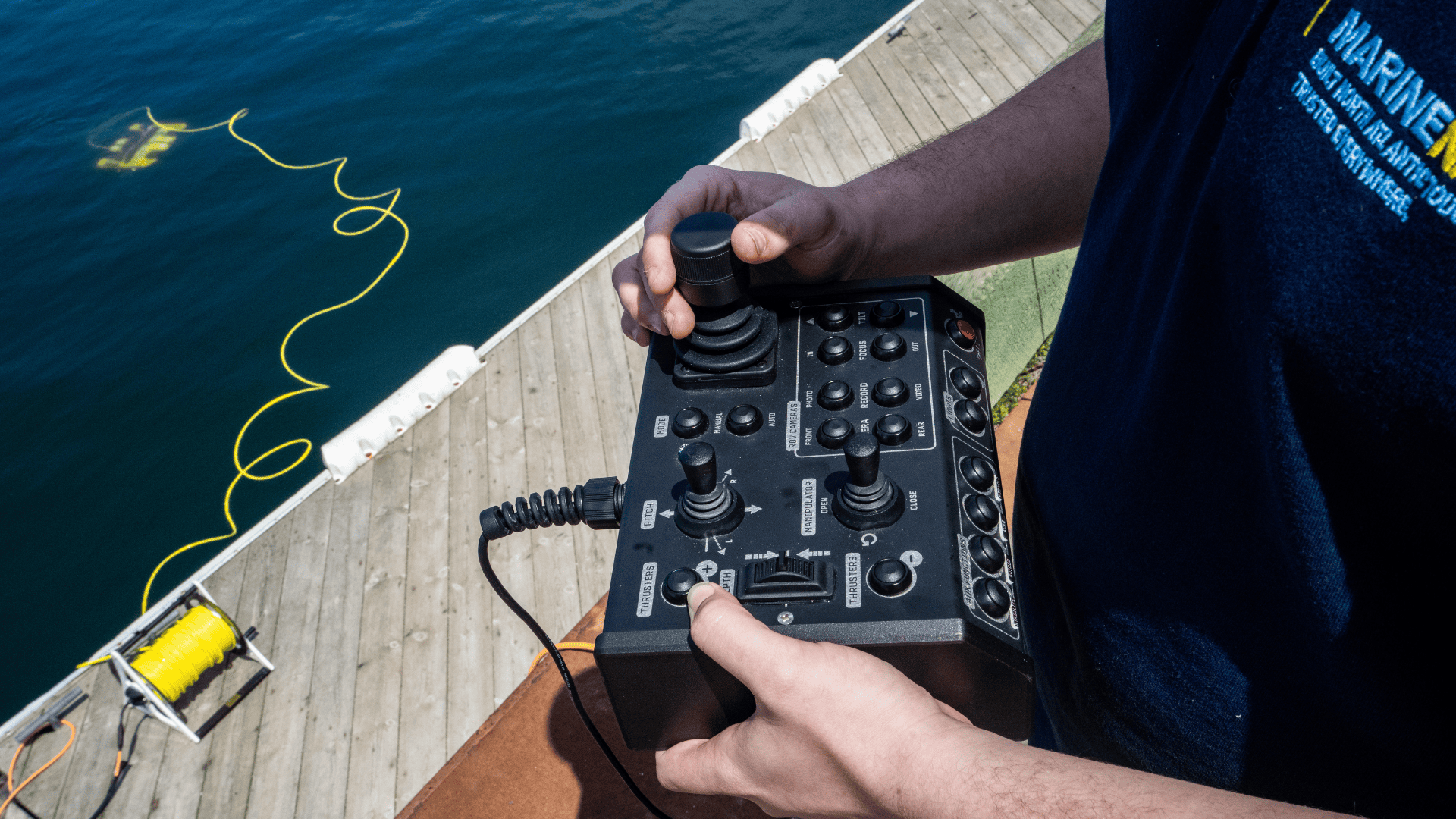
MarineNav, based in PEI, is making ship hull inspections safer and more efficient with its autonomous remotely operated vehicle (ROV) system, “Mobula,” that uses visual reference markers to navigate precise flight paths along ship hulls.
“The collaboration between MarineNav ROV systems, Voyis stereo cameras and autonomous software from EIVA provides naval crews a dependable way to inspect ship hulls without the guesswork,” said Kevan Merson, Chief Executive Officer of MarineNav. “…The Naval Technology Innovation Challenge has allowed us to advance this technology and demonstrate its impact for the Royal Canadian Navy.”
Precise Design Engineering Solutions, operating across three locations in Atlantic Canada, collaborated with Tronos and Dalhousie University to enable rapid production of high-precision components, supporting ships operating in remote environments and strengthening naval operational readiness.
“Our work, along with our partners who we are collaborating with on this project, demonstrates how additive manufacturing can address some of the Navy’s most pressing sustainment challenges,” said Bruce Stover, President and Chief Executive Officer of Precise Design Engineering Solutions. “…By controlling the full process—from CAD modeling through to testing, certification, and production inspection—we believe we can deliver reliable, high-quality parts exactly when and where they’re needed.”
Evolving Priorities for a Changing World
The challenges evolve each year to reflect the RCN’s operational priorities.
The 2026 Naval Technology Innovation Challenges are now open. If you’re an Atlantic Canadian SME ready to drive impactful innovation, apply before the deadline on July 24, 2026.
Learn more about this year’s challenge streams and apply today: coveocean.com/challenges